
The 3-3-3 rule for cats, and what it means for travel
Updated
Three days, three weeks, three months. And one consequence people miss.

What the rule says
Three days. The cat hides, eats little, and may not use the litter tray while anyone is watching. Nothing here is a problem to solve; it is the cat deciding the house is not actively dangerous.
Three weeks. It learns where things happen and when. Routine is what a cat reads as safety, so the more predictable these weeks are, the shorter they tend to be.
Three months. Behaviour that looks like the cat you will actually live with. Personality that was invisible in week one turns up here.
What it is not
It is not research, and no one claims it is. It circulates because it sets expectations for the first fortnight, which is when most people worry that they have made a mistake. Treat it as a shape, not a schedule — plenty of cats run faster or slower, and neither means anything is wrong.
Where the rule comes from
It comes out of rescue and shelter work, not out of a laboratory, and knowing that explains both its strengths and its limits. Shelter staff needed something to tell adopters on the day they took a cat home — something short enough to remember in a car park, and reassuring enough to stop people returning a cat in week one because it had spent four days behind the sofa. That is what the rule is for, and at that job it is very good.
What it was never designed to be is a diagnostic. It describes the average shape of an adjustment, and averages have no opinion about your particular cat. A confident young cat from a foster home may skip most of the first stage. A cat that has been through several homes may take considerably longer than three months, and that is not a warning sign in itself. If you find yourself measuring your cat against the calendar and worrying, the rule has stopped helping and is worth putting down.
The version people apply to moving house
The rule is about adoption, but most people meet it again when they move, and it transfers better than you would expect. A cat arriving in a house it has never smelled is solving the same problem as a cat arriving from a shelter: working out whether this territory is safe. The difference is that you are usually more stressed during a move than during an adoption, and cats read that.
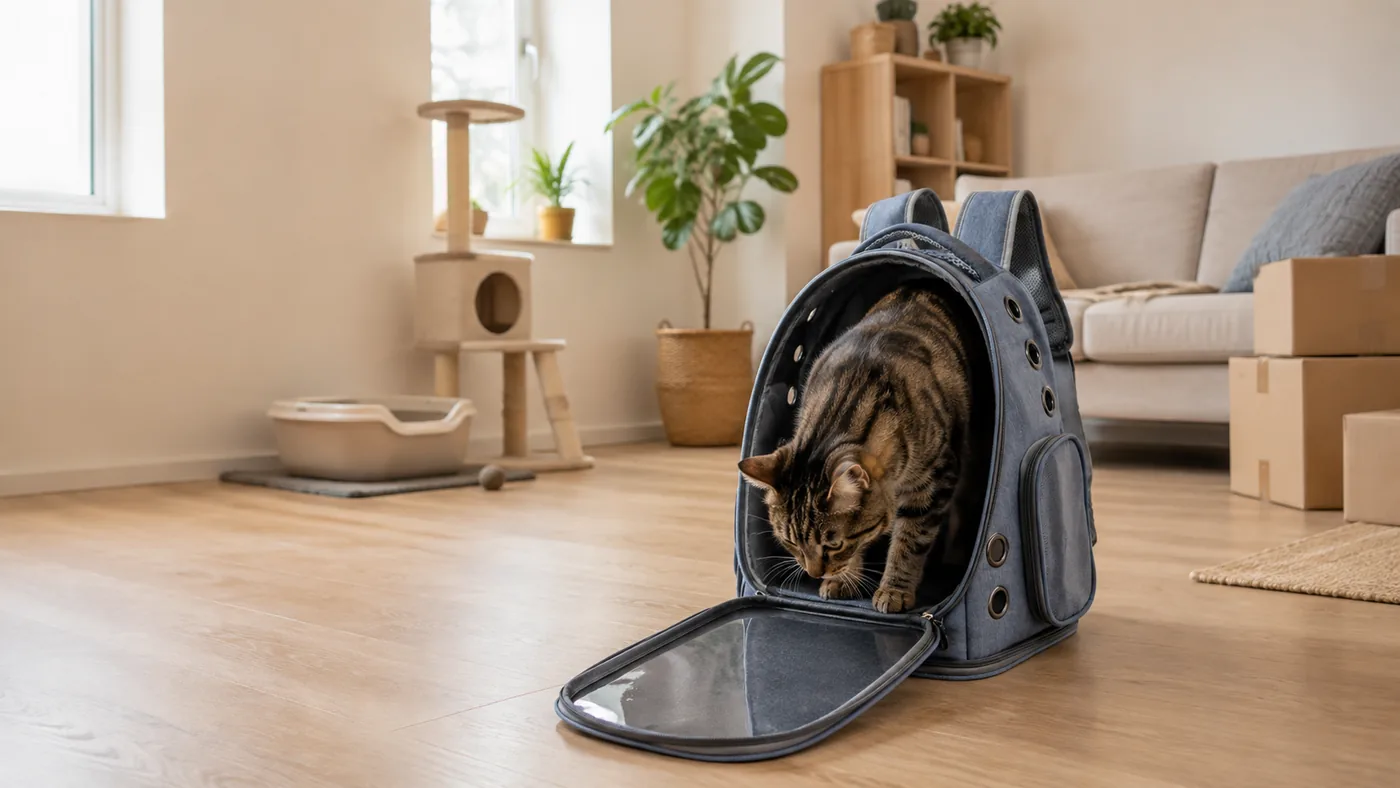
The practical version is one room, not the whole house. Set up a single room with the litter tray, food, water, a hiding place and something that smells of the old home, and let the cat widen its own territory from there over days rather than being shown around on the first evening. Most of the moving-day disasters people describe — a cat that bolts out of an open front door, a cat that vanishes into a cavity under the kitchen units — happen because the cat had access to the whole house before it had a base in it.
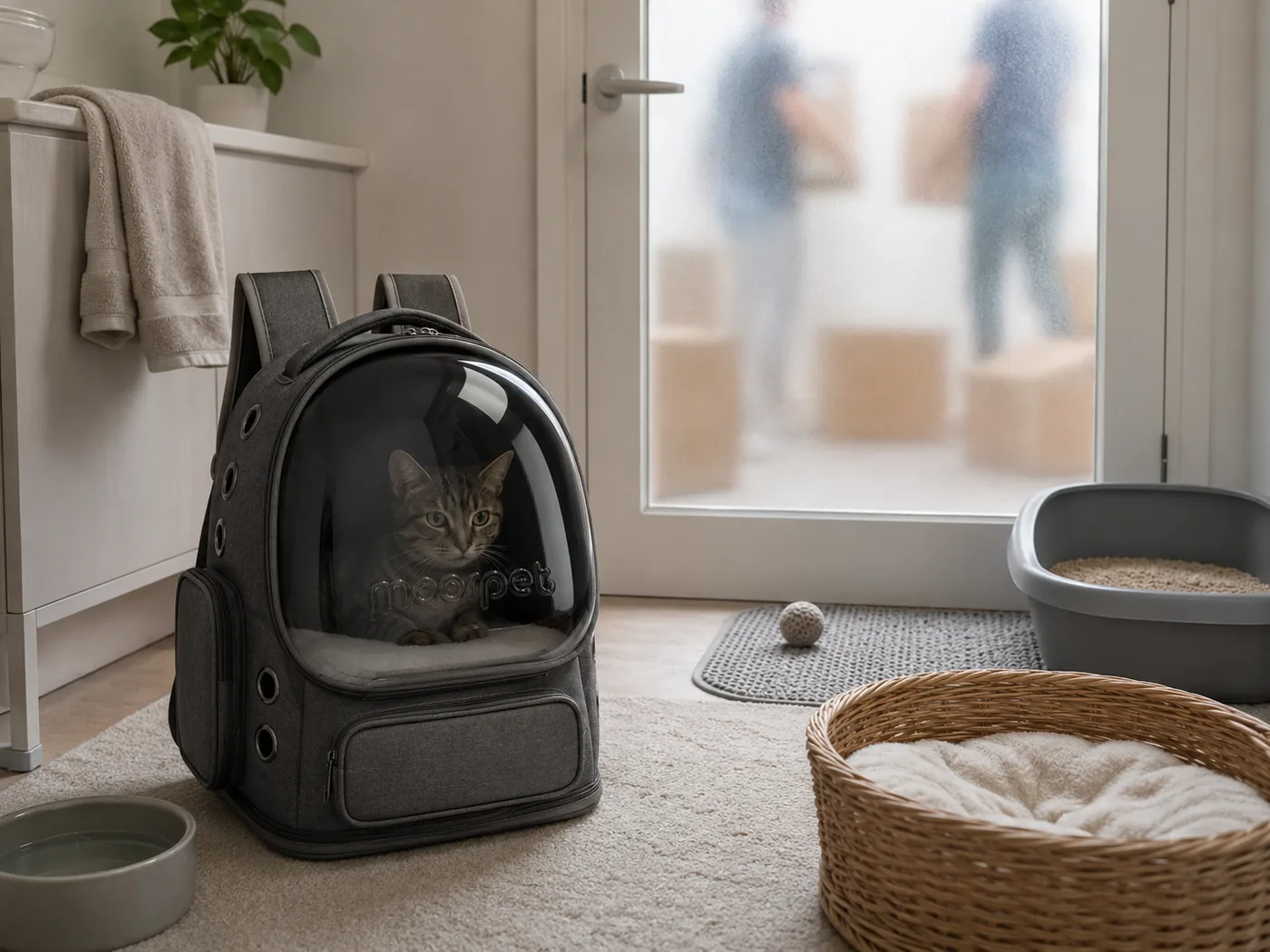
What it means for a carrier
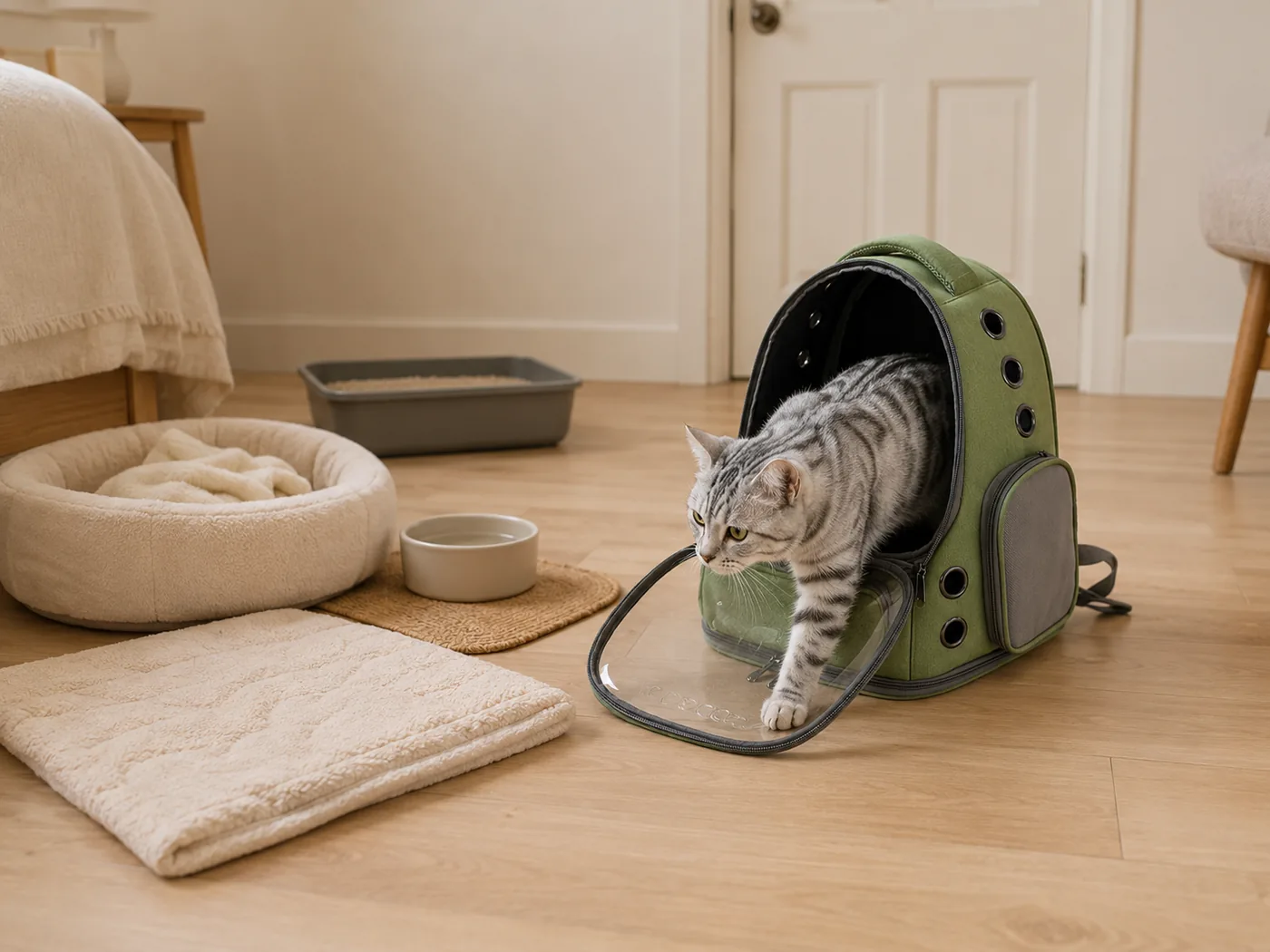
One thing, and it is worth saying plainly: do not introduce a carrier during the first three weeks, and do not take a newly adopted cat out in one. The cat is still working out whether the house is safe. Adding a bag that moves, and an outdoors it has never seen, is a poor use of the only period in which it is deciding.
Leave the carrier out, open, as part of the furniture. By the time the three weeks are up it will have stopped being an event, which is exactly where you want to start.
There is one exception, and it comes up constantly: the health check you cannot postpone. A newly adopted cat often needs a vet within days, and no amount of settling theory changes that. When that is the situation, the answer is not to delay the appointment, it is to accept that this particular journey will be a bad one, keep it as short as possible, and not treat it as the cat's introduction to the carrier. The three weeks start afterwards, from scratch.