
How to get a cat into a carrier
Updated
A cat does not refuse the carrier. It refuses what the carrier announces.
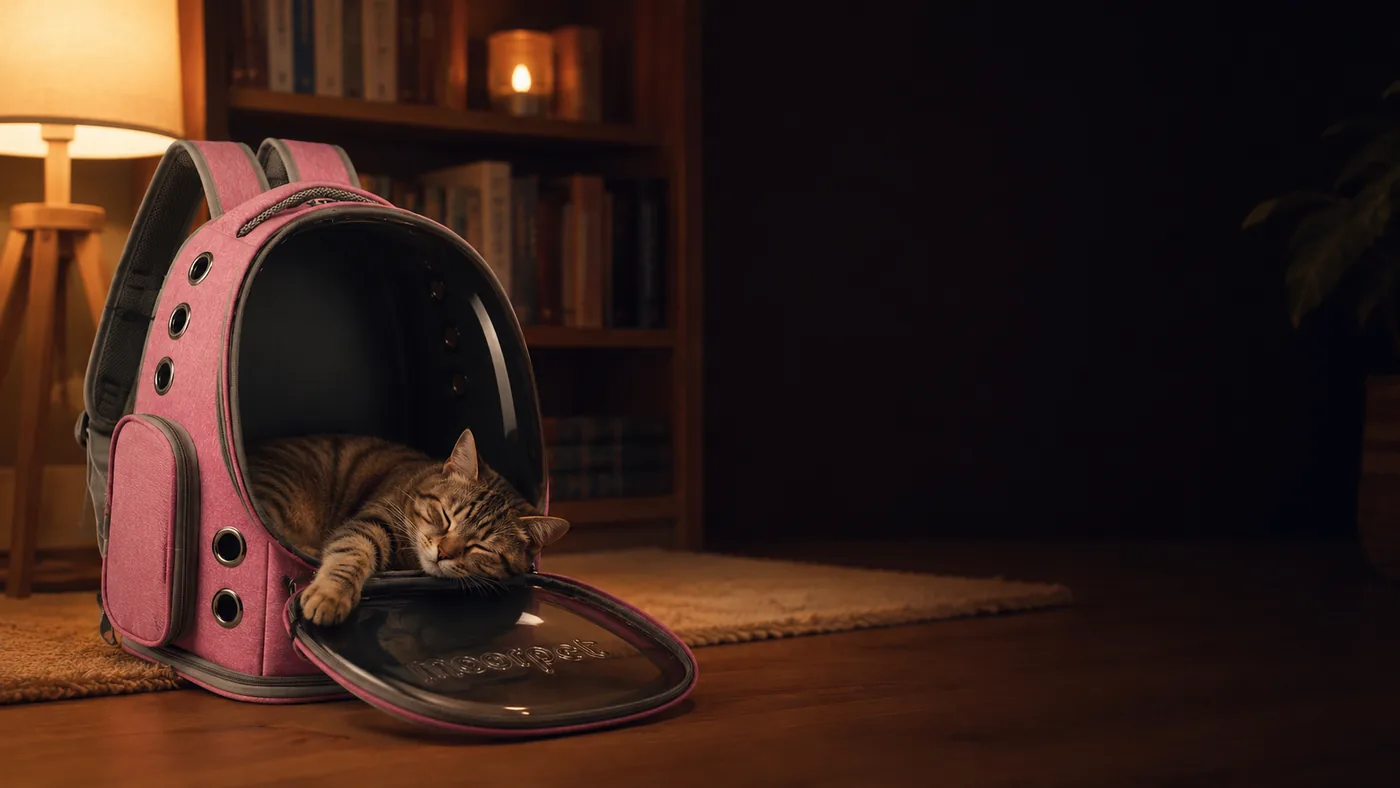
Why your cat fights the carrier
If your cat stiffens the moment the carrier comes out of the cupboard, the problem is not the bag. It is what the bag means. In most households the carrier leaves storage for one reason only: a trip to the vet. A cat links two events far faster than we do, and yours worked this out a long time ago. It is not avoiding an object, it is avoiding a consequence.
That has a freeing consequence of its own. To change the behaviour you have to break the association, not improve the carrier. A more comfortable bag changes nothing while the only outing it announces is an unpleasant one. A carrier that sits in the living room for three weeks with nothing happening in it, on the other hand, stops announcing anything rather quickly.
What the research actually found
This is not just breeder folklore. A team at the University of Veterinary Medicine in Vienna compared two groups of cats before a car journey and a consultation. The cats that had been familiarised with the carrier in short sessions showed fewer signs of stress during transport, and their examination took less time than that of the unprepared cats. Familiarisation does not make the carrier pleasant — it makes it unremarkable, and that turns out to be enough. (Pratsch et al., Applied Animal Behaviour Science, 2018.)
Cats Protection and the PDSA give the same practical advice from the other direction: choose a carrier that opens from the top as well as the front, so a cat can be lowered in rather than pushed through an opening it can brace against.
The three weeks, step by step
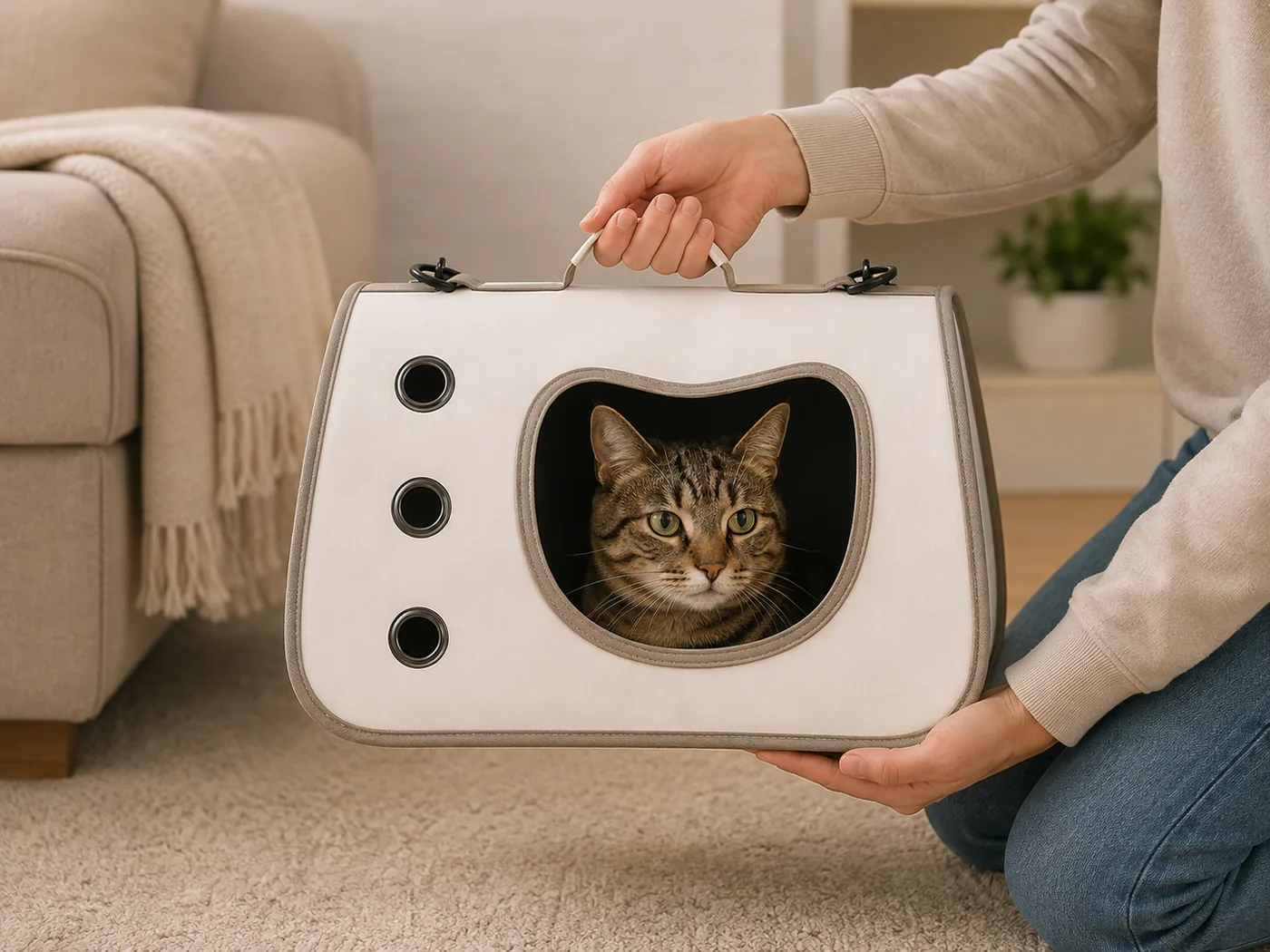
Week one. The carrier lives open on the floor, in a room the cat already uses, with a blanket it already sleeps on inside. You do nothing else. You do not call the cat over, you do not put it in. The only job this week is that the carrier stops being an event.
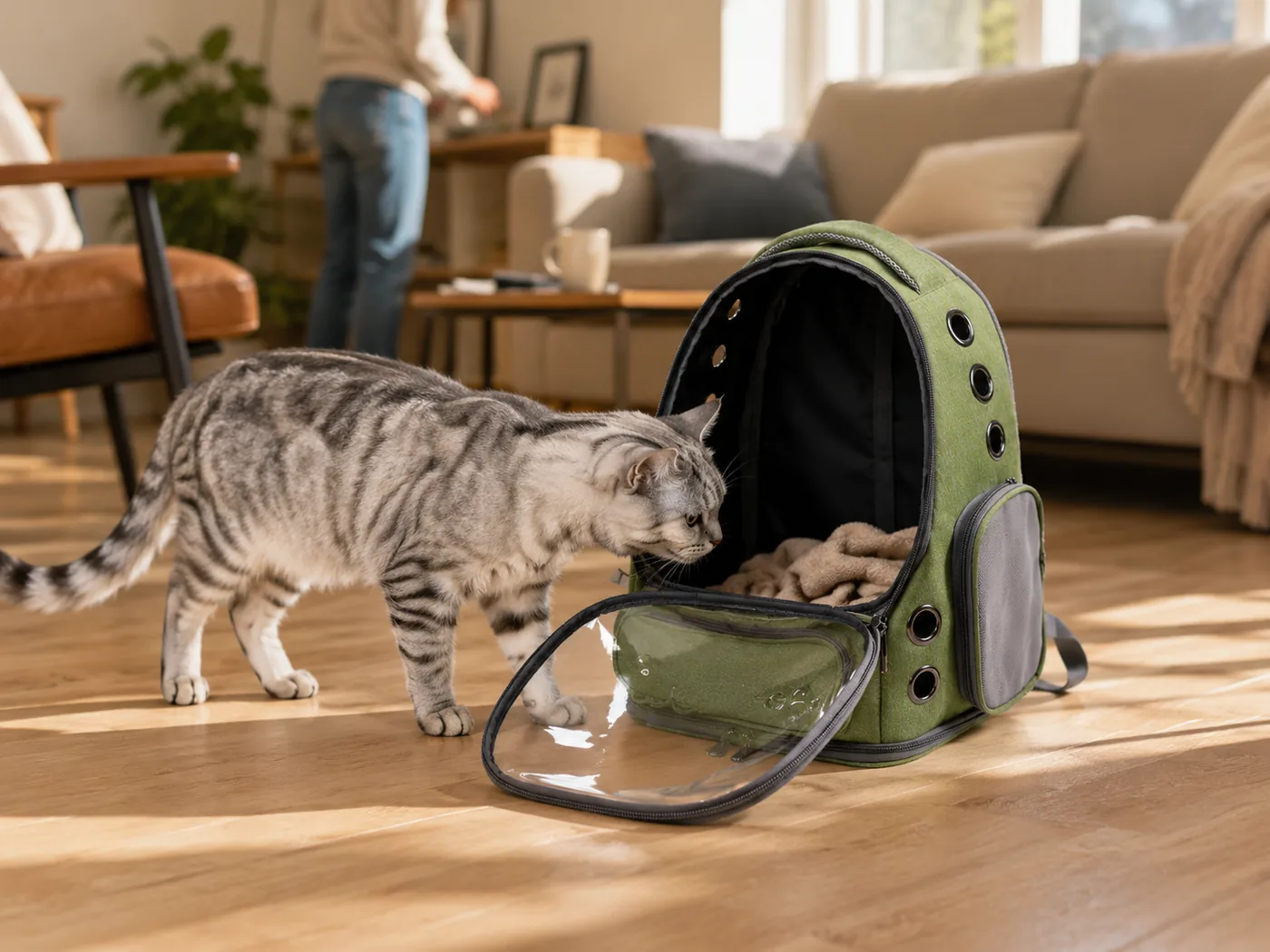
Week two. Treats start appearing inside, without ceremony — dropped in while you walk past, found later. The cat should be going in and out on its own before the week ends. If it is not, week one runs again rather than week three starting early.
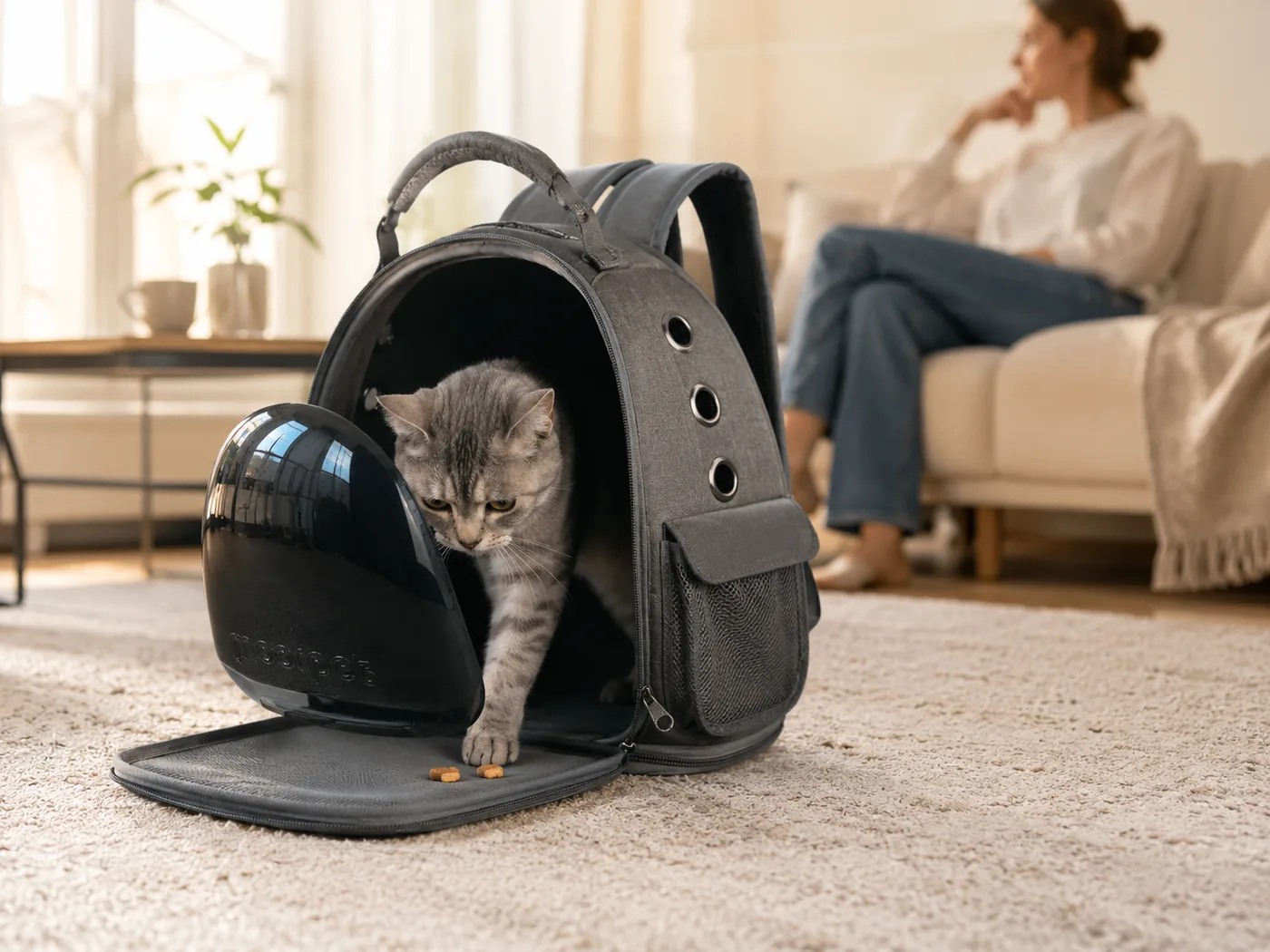
Week three. Close the opening for five seconds while the cat is inside, then open it before the cat asks. Build to a minute across the week. Lift the carrier a few centimetres and set it down again. Every one of these is a separate skill, and each is small enough to fail harmlessly.
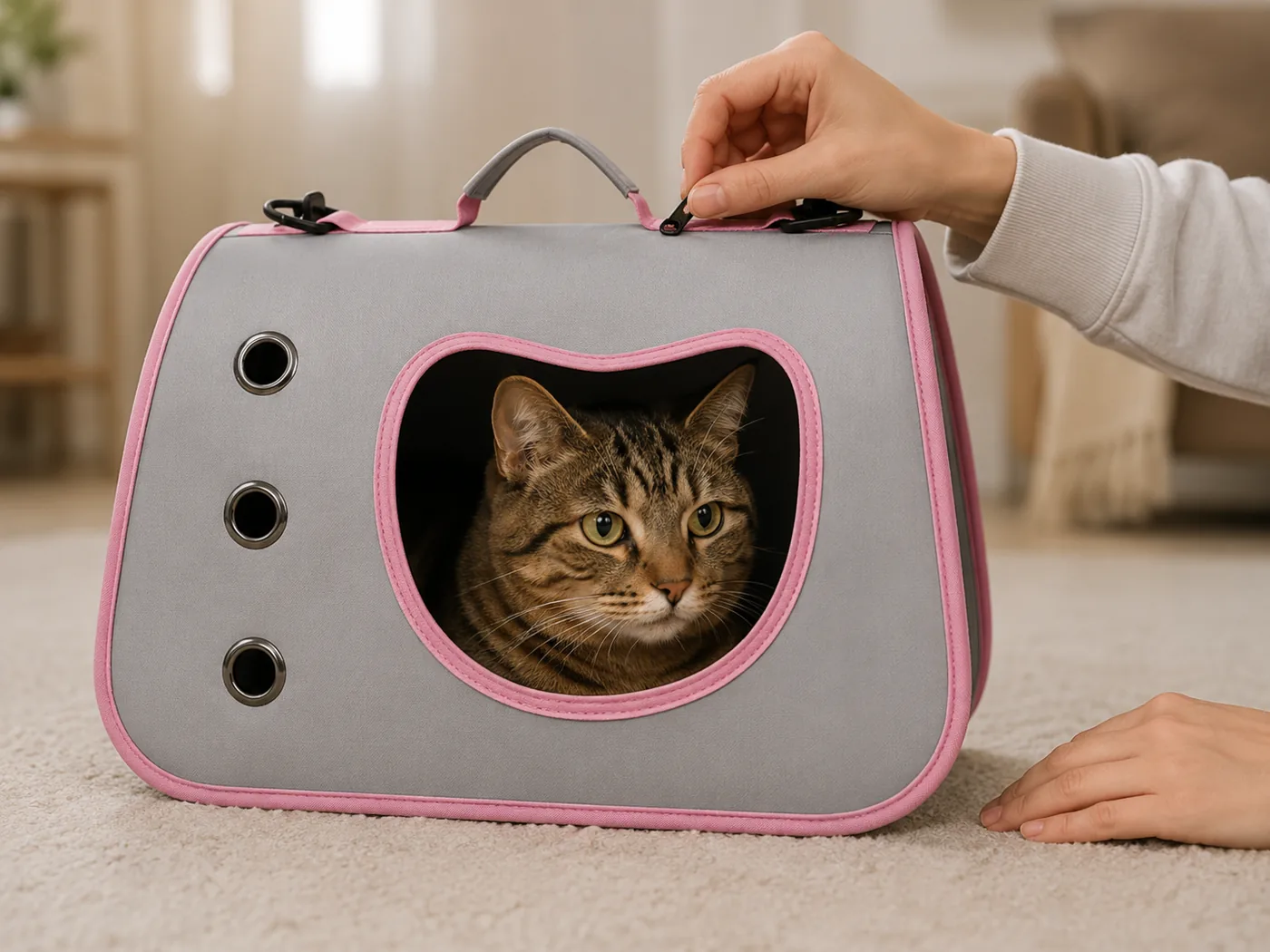
If three weeks is not enough
For a minority of cats it will not be, and the usual reason is that a step was taken before the one under it was solid. The commonest version is closing the opening in week three on a cat that was going in for treats but had never settled inside for more than a few seconds. The fix is not patience with the current step, it is going back one and staying there longer than feels necessary.
The second commonest reason is that the carrier keeps disappearing. If it goes back in the cupboard between sessions, the association rebuilds itself every time, and week one starts again from zero. The method only works because the bag is permanently unremarkable, which means it has to be permanently present. A carrier that folds flat helps here for a mundane reason: one that lives under a bed is one you will actually leave out.
And for a cat with a genuinely bad history — a rescue that fights any confinement, or a cat that has had a traumatic journey — this is a reasonable thing to raise with a vet rather than to keep grinding at alone. There is published work on reducing transport stress, including a trial of a single pre-appointment dose of gabapentin (van Haaften et al., Journal of the American Veterinary Medical Association, 2017). That is a conversation with someone who knows the animal, not something to act on from a product page.
The day itself
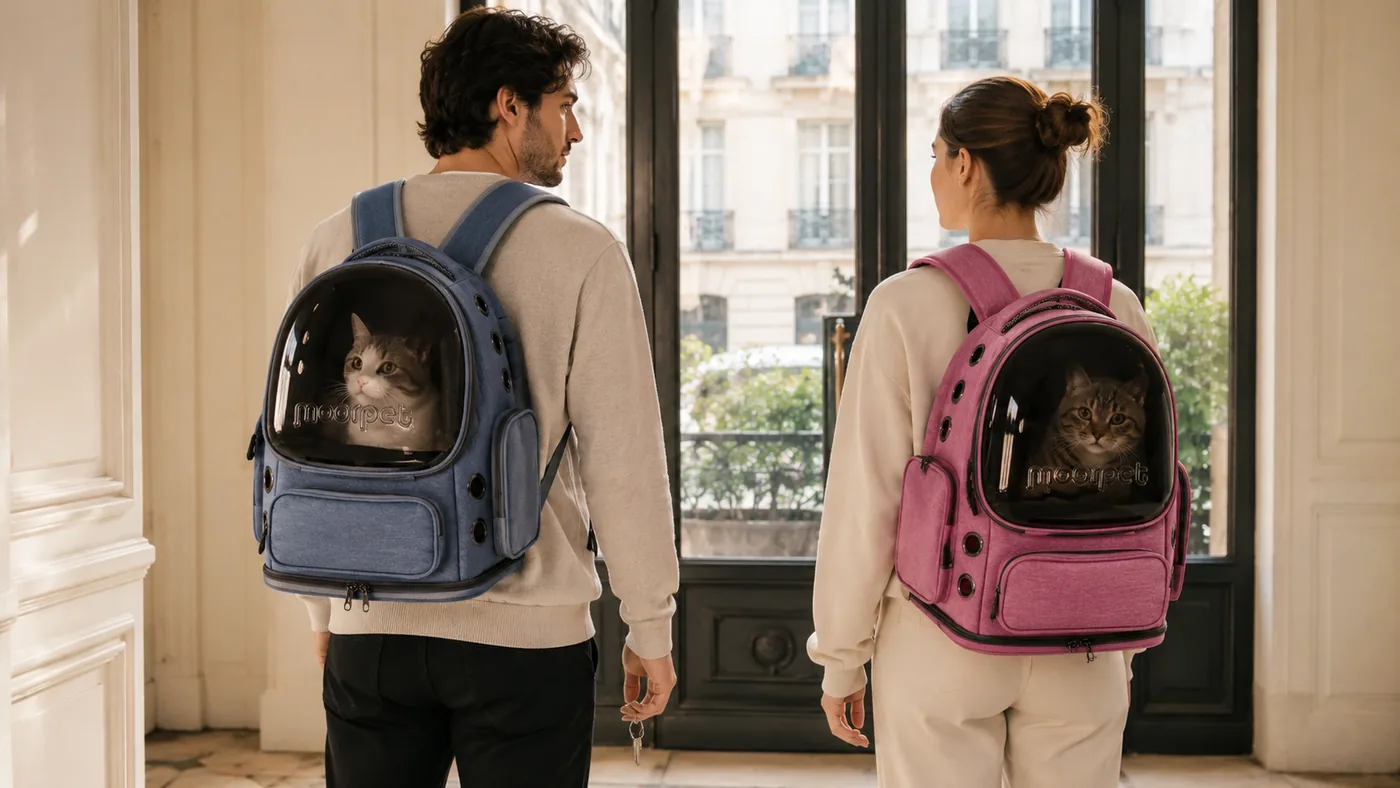
Present the opening upwards rather than forwards, and lower the cat in back legs first. Never push a cat in head first: it grips the rim, and the whole experience gets filed under restraint. A blanket over part of the carrier cuts the visual noise while still letting air through. And feed nothing in the three hours before you leave.