
Are cat backpacks safe, and do cats like them?
Updated
Some cats settle in a backpack. Some never will. You find out in one short walk.
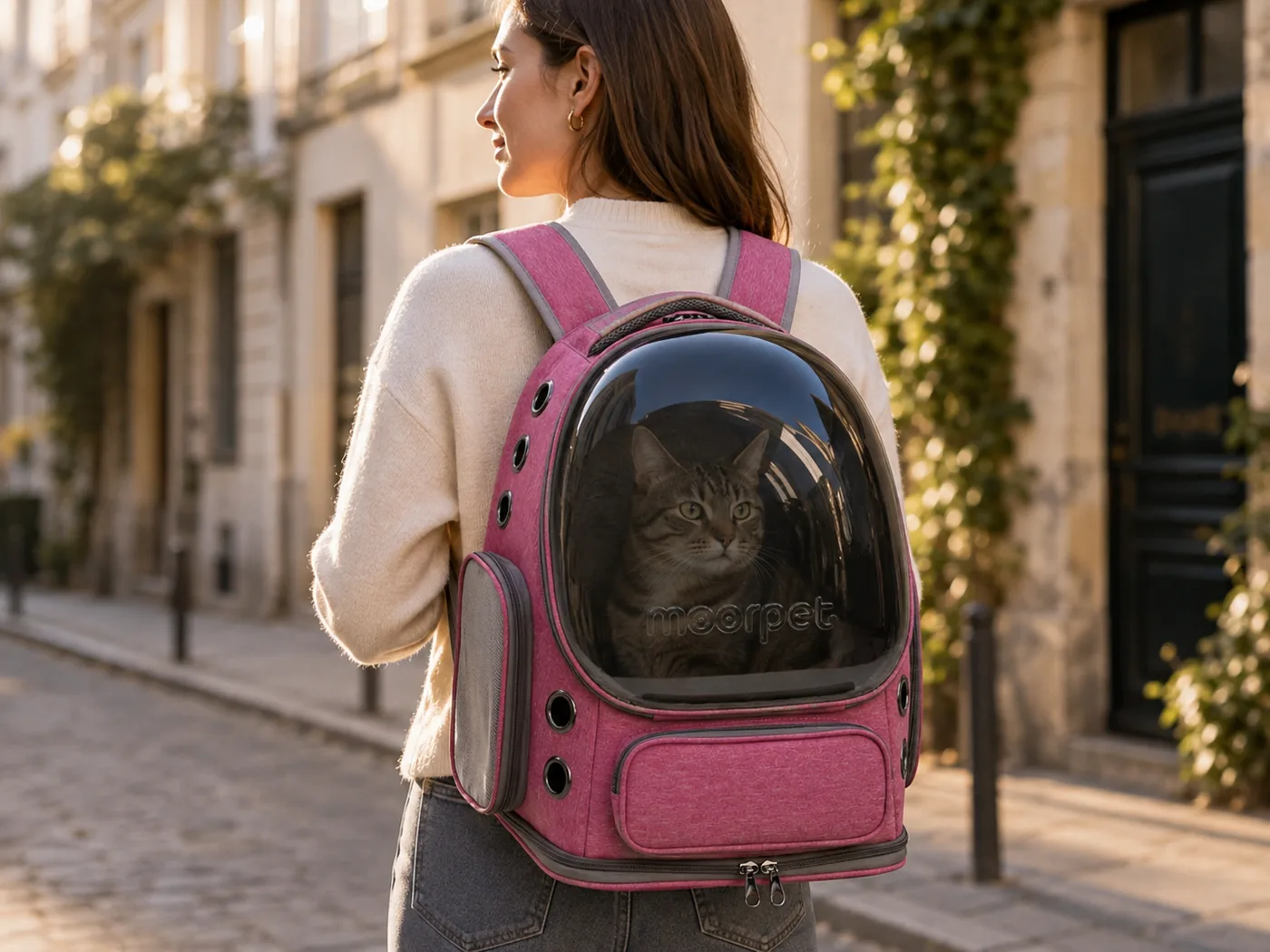
What veterinary advice actually covers
Search for whether vets recommend cat backpacks and you will find plenty of pages implying an endorsement. There is no general one. What veterinary organisations publish is criteria, and they apply to any carrier: room to stand up, turn around and lie down flat; ventilation on more than one face; and an opening that lets a cat be lowered in rather than pushed.
We describe what those organisations publish rather than claiming they back a product, because none of them has.
Which cats take to it
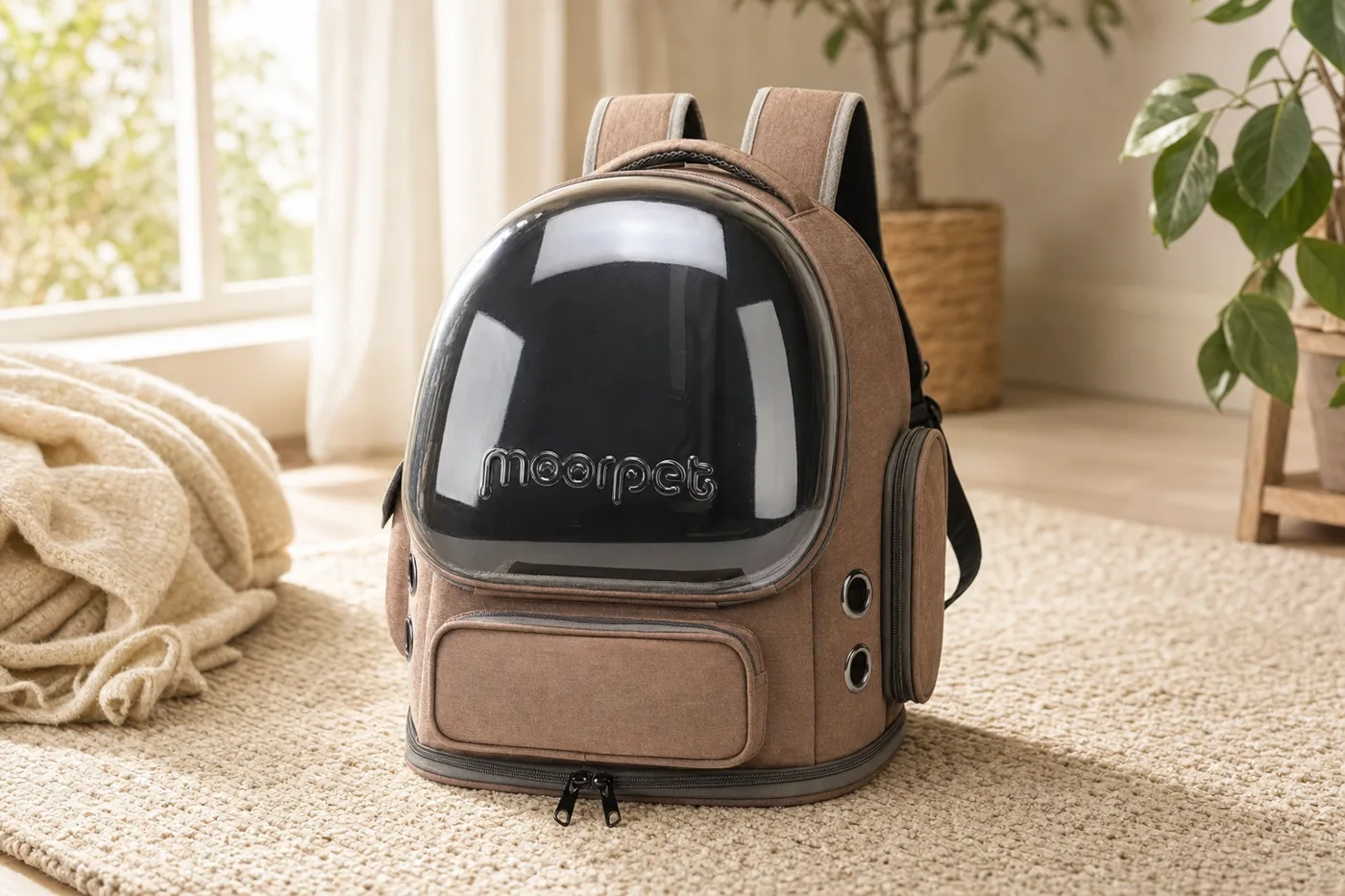
A backpack suits a cat that already tolerates being picked up and that watches things happen from a window. Those cats tend to settle once the bag is moving. A cat that freezes when lifted, flattens itself, or vocalises without pause is telling you something, and a longer walk will not change it.
That is not a failure of the cat or the bag. A shoulder carrier held at hip height is far less exposed, and plenty of cats that refuse a backpack are perfectly calm in one.
What to check on the bag itself
- Ventilation on more than one side. A single mesh panel moves no air once the bag is against your back.
- A base that stays flat. A sagging floor is what makes a cat brace, and bracing is what makes it panic.
- An internal clip. It attaches to a harness so the cat cannot leave the bag when you open it.
- Straps rated for the load. Ours are certified at 15 kg by the manufacturer — a structural rating for the bag, not a statement about what belongs in it.
Heat, and the thing about the bubble
The clear front is what sells a bubble backpack and it is also the part that needs the most thought. A transparent dome in direct sun behaves like a small greenhouse, and it is against your back, where you will not feel it warming. This is the single risk with these bags that people underestimate, and it has nothing to do with build quality — it is physics, and it applies to every bubble carrier on the market.
The handling is straightforward once you know it. Walk on the shaded side of the street in summer, do not leave the bag standing in sun while you sit outside a cafe, and never leave a cat in one in a parked car, which is the same rule as for any carrier and for the same reason. Cats show heat stress late and subtly: panting in a cat is not the mild signal it is in a dog, it is a reason to stop immediately, get into shade and open the bag.
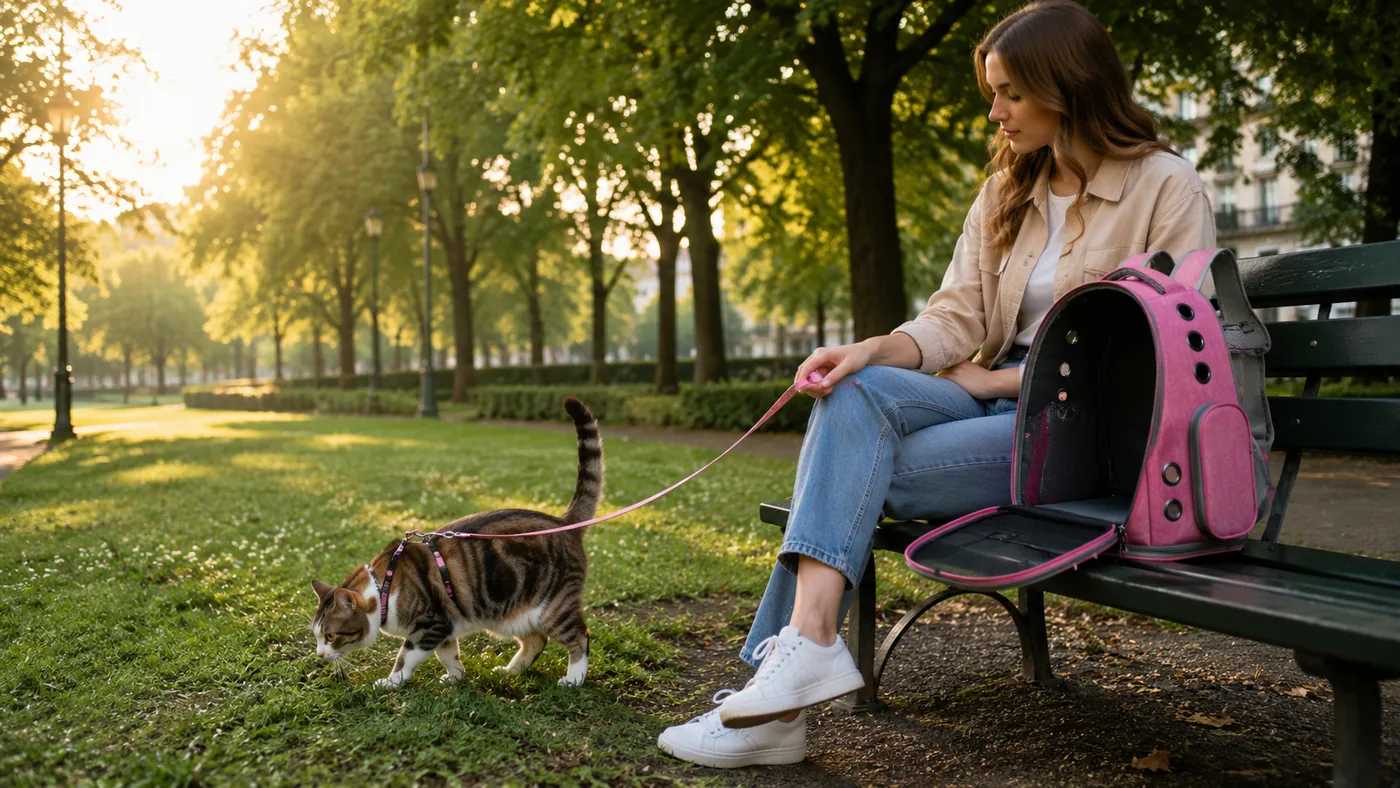
Plan the walk around a fallback point — a bench, a shaded square, somewhere you can stop and set the bag down within a couple of minutes from wherever the route takes you. Most first outings that go wrong go wrong because there was nowhere to pause.
How long is too long
Short, and shorter than most people assume. A backpack carries no litter tray, so the ceiling is set by the cat's bladder rather than by your legs, and a cat that is holding on is a cat under stress whether or not it looks calm. For an unfamiliar cat, twenty minutes is a full first session. For a cat that has done it many times and settles, an hour is reasonable; beyond that you want a plan for water and a stop.
The other limit is the one nobody likes: some cats simply never take to it, and no amount of practice converts them. If the third or fourth outing looks exactly like the first — flattened, pupils wide, silent or vocalising without pause — this cat prefers the ground. A shoulder carrier held at hip height is a far less exposed place to be, and it is not a consolation prize.
The first outing
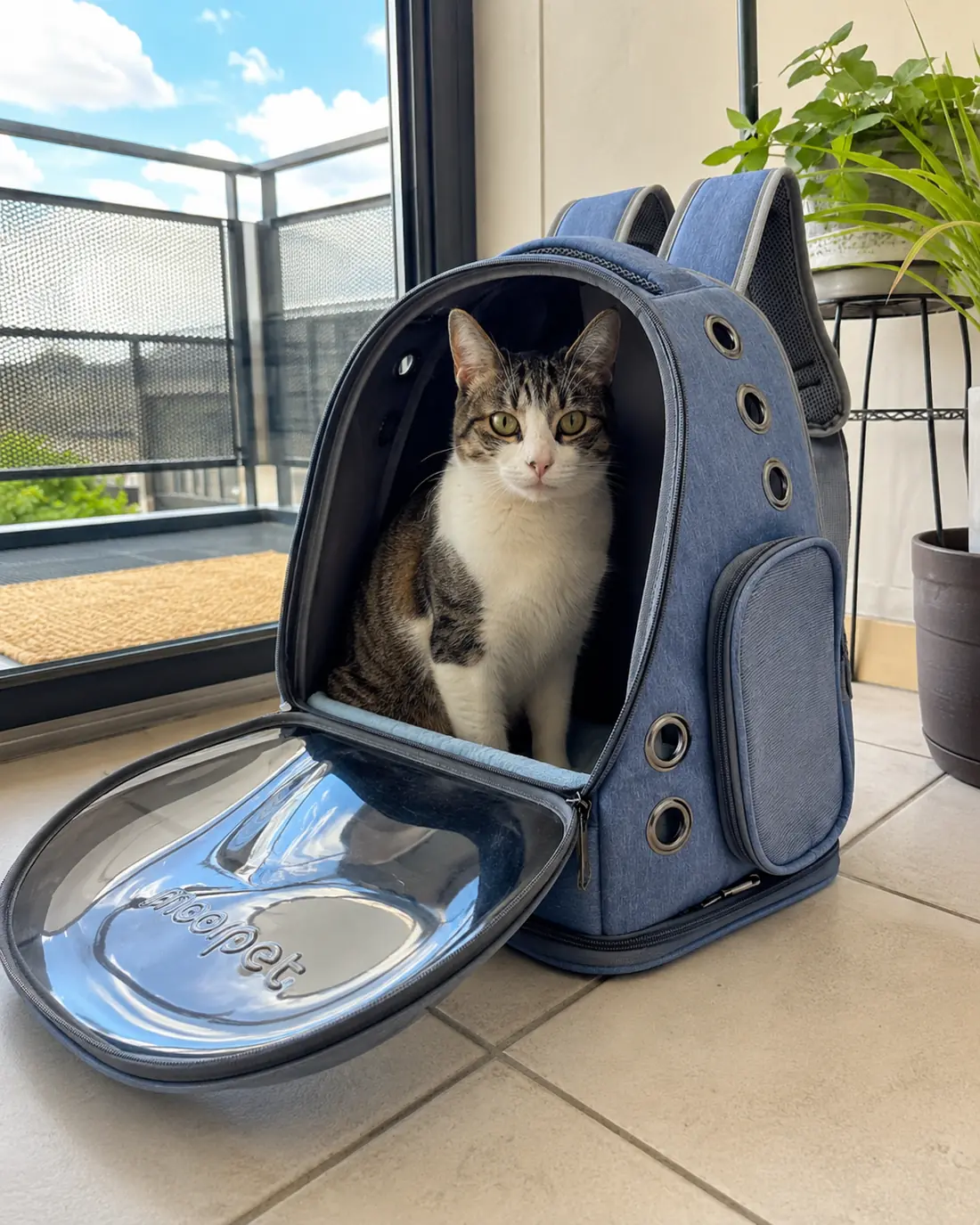
Five minutes, around the block, after several days of the bag sitting open at home. Come back before the cat wants to. The goal of the first walk is not distance, it is that nothing memorable happens.